SUNY Oneonta marked Black History Month with a dynamic series of lectures, performances, exhibitions and community gatherings that celebrated the achievements, resilience and cultural impact of Black leaders and communities—past, present and future.
Signature programs throughout the month invited the campus community to reflect, learn and engage in dialogue.
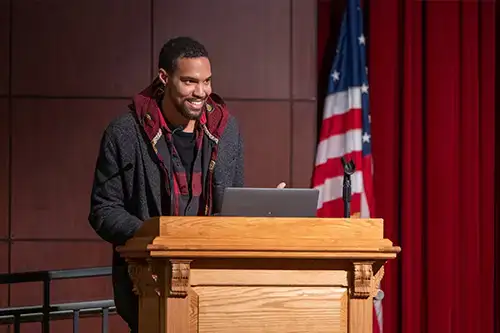
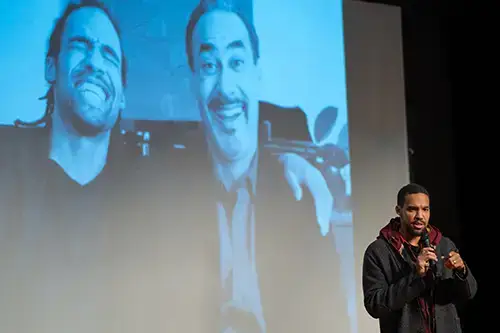
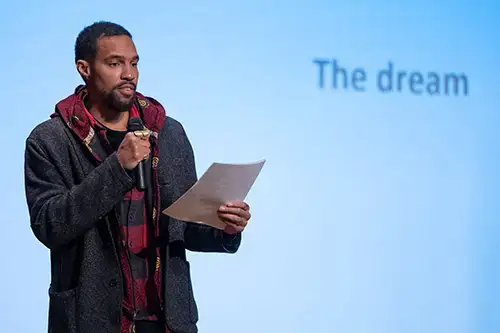
The month opened with the 2026 Black History Month Distinguished Lecture in the Hunt Union Ballroom, featuring award-winning musician, filmmaker, educator and activist Pierce Freelon, whose work bridges art, culture and community. Blending hip-hop, electronic music and Afro-Caribbean rhythms, Freelon creates multimedia experiences that promote positive cultural identity and emotional intelligence. During his campus visit, he gave a social media shoutout to SUNY Oneonta after seeing his image included in the university’s new Black History Month mural in the Center for Racial Justice and Inclusive Excellence (CRJIE).
Our aim is to bring campus-hosted events that will continue to further our social justice goals."
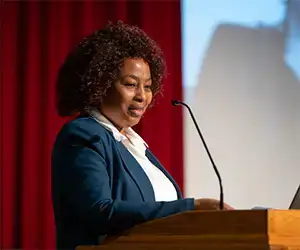
“Our aim is to bring campus-hosted events that will continue to further our social justice goals, deepen our understanding of our shared humanity through in-depth reflections, and open discussions,” said Bernadette Tiapo, the Vice President for Equity and Inclusion and Equal Opportunity and Compliance.
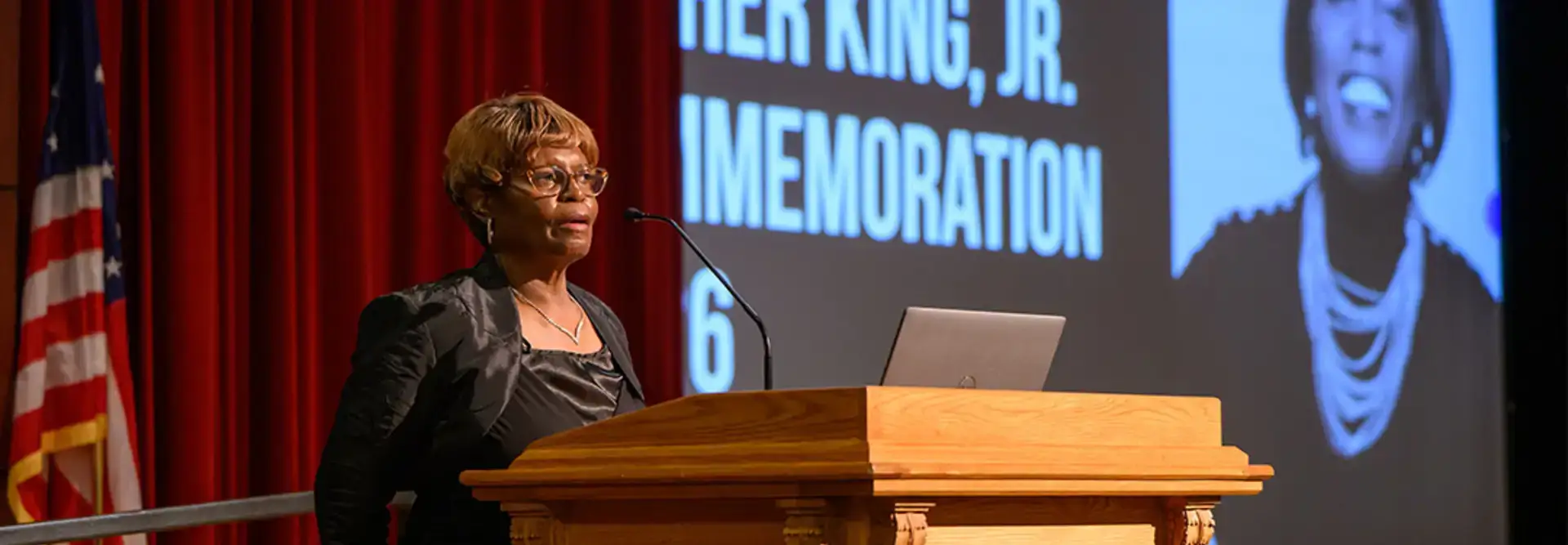
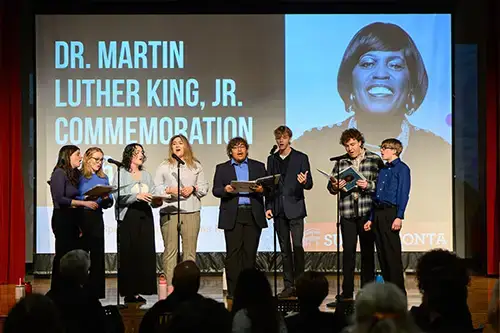
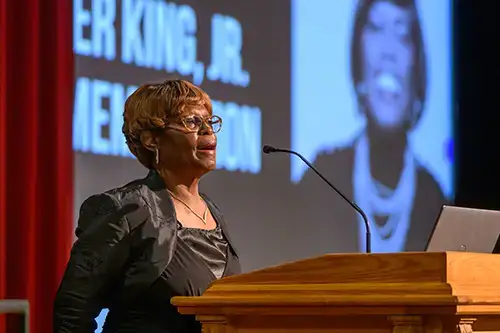
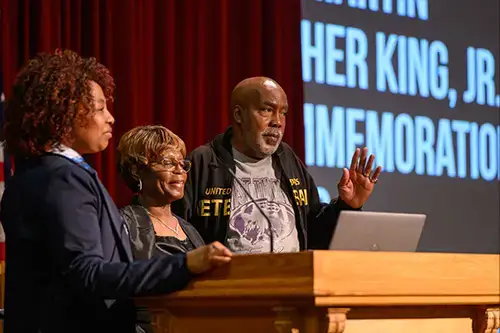
Activist Sarah Collins Rudolph delivered the keynote address at the Dr. Martin Luther King Jr. Commemoration and Community Breakfast in Hunt Union. Poet Jaime Lee Lewis brought audiences together for A Gathering of Words, a two-day poetry reading held in both Hunt Union and the CRJIE. A Black History Month film series, hosted by the Office of Equity and Inclusion and the CRJIE, paired screenings with faculty-led discussions that explored history, culture and social justice.
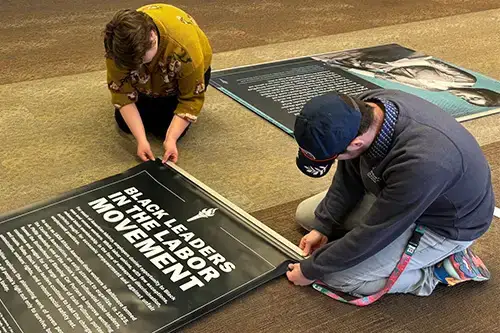
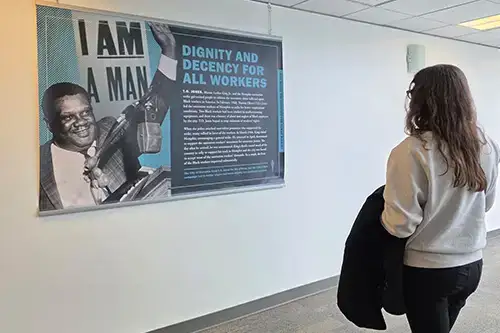
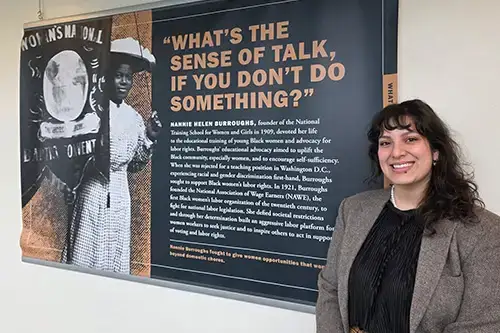
Meanwhile, a new student-curated exhibition, “Black Leaders in the Labor Movement,” highlighted the long struggle for economic opportunity and dignity at work. Sponsored by the Office of Equity and Inclusion and created by students in the Cooperstown Graduate Program with faculty advisors Gretchen Sorin and William Walker, the exhibition traces a powerful timeline, from the 1838 Caulkers Association formed by African American dock workers in Baltimore to the leadership of A. Philip Randolph and today’s labor advocates.
The exhibition was displayed in the CRJIE’s Freedom Room through Feb. 8 and continues on the third floor of Milne Library through March 1. An opening reception invited the campus community to explore the installation and connect with this powerful history.