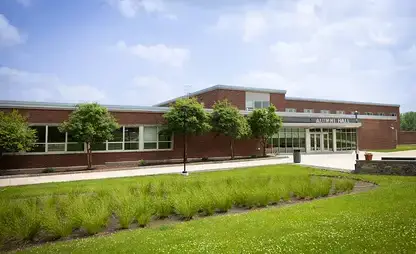
Alumni Hall
Alumni Hall is fully heated and cooled by geothermal energy, utilizing 39 bores beneath the parking lot. This was part of the final phase of the 2013-23 campus Facilities Master Plan, setting the stage for the next plan. The building is LEED Platinum certified by the Green Building Council for its sustainability efforts.
Arboretum
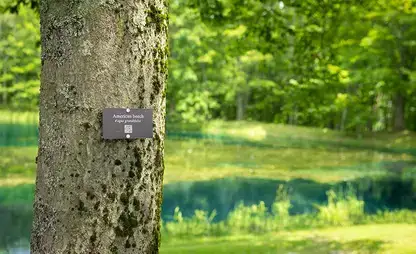
The SUNY Oneonta Arboretum features trees tagged with species names and QR codes for a self-guided walking tour. Though the description is still being developed, the page offers public access for visitors to explore and learn more. It's a great opportunity for nature enthusiasts to discover local flora while utilizing digital tools for additional information.
Bus Stops
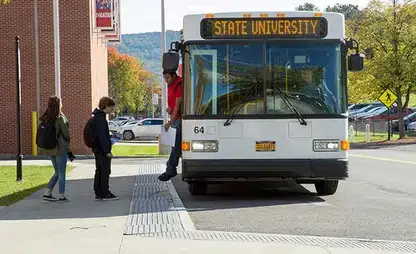
To help with sustainable travel and reduce carbon emissions from traffic around campus, three bus stops are located on campus. One is near the Fine Arts Center, another between Bacon Hall and Human Ecology, and the last is between Milne Library and Schumacher Hall.
College Camp
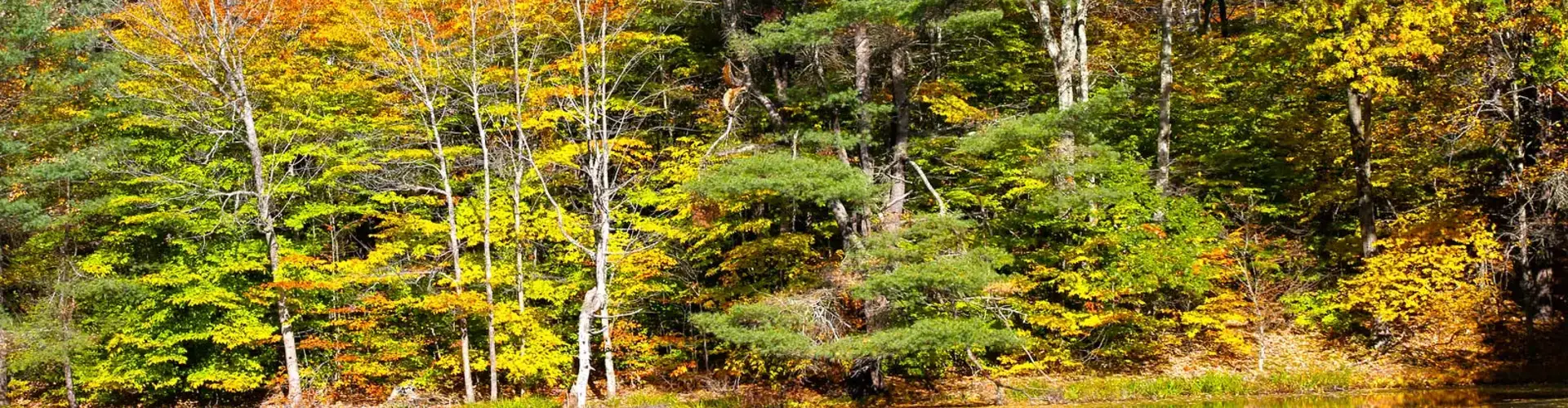
SUNY Oneonta’s College Camp spans 276 acres of former farmland and woodland on Hoffman Road, offering educational, recreational and social activities for the campus community. This cooperative effort between the Student Association, SUNY Oneonta, and Oneonta Auxiliary Services supports various campus programs and events.
Dragon Express Recycling Center
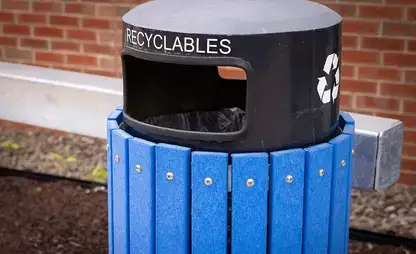
Outside the mailroom, there’s a station for breaking down boxes and sorting recyclables like cardboard, plastic film, and waste. Box cutters are available for easy box breakdown, and plastic film is collected by the Office of Sustainability, then taken to the ARC Otsego ReUse Center to be recycled into Trex decking. Plastic film includes materials with recycling numbers 2 and 4, like Amazon bubble mailers and other packaging.
EV Chargers
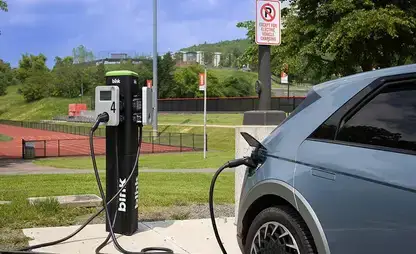
SUNY Oneonta makes EV charging convenient with Blink and ChargePoint stations at Hunt Union, Alumni Hall, and Alumni Field House, all available 24/7. These Level 2 chargers offer fast, reliable service. Blink stations charge $0.35 per kWh, while ChargePoint rates start at $0.25 per hour for the first four hours, increasing after that. Plans for more stations are underway to meet growing demand.
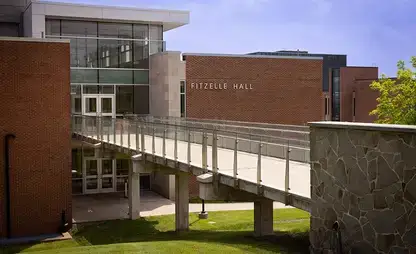
Fitzelle Hall Bridge
As an example of the standard on every new renovation, the Fitzelle Hall heated bridge reduces the use of salt to melt ice and snow through pipes with heated fluid, keeping the bridge clear during cold weather.
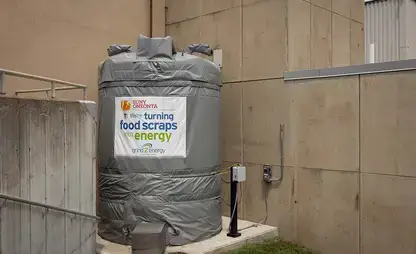
Grind2Energy Tanks Behind Dining Halls
SUNY Oneonta has installed Grind2Energy food waste processing systems in Mills and Wilsbach dining halls, becoming the first college in New York State to use this technology. Grind2Energy converts food scraps—including fats, oils, grease, and most bones—into a slurry transported to a nearby anaerobic digester. There, the slurry is recycled: water is recovered, methane is captured for energy, and the nutrient-rich byproduct is repurposed as fertilizer for local farms. This system also lowers the campus's carbon footprint by reducing transportation distances compared to previous waste management methods.
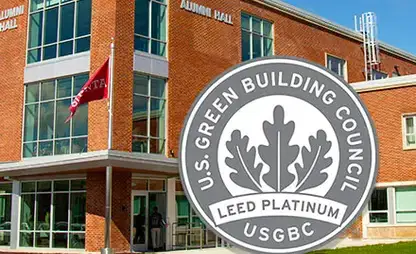
LEED Certification
The two buildings with LEED certification are Physical Science (Gold) and Alumni Hall (Platinum). Plans are underway for Netzer’s sustainable transformation.
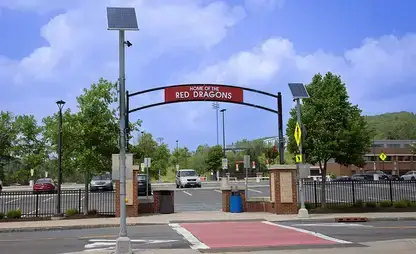
Motion Sensor Lights
All new renovations at SUNY Oneonta now include motion sensor lighting, which you can see in action during a walk through the Hulbert renovations. The Hunt Union parking lot also uses motion sensors, and buildings like Alumni Hall, Physical Sciences, ESB, and Fitzelle are equipped with motion sensor lights as well.
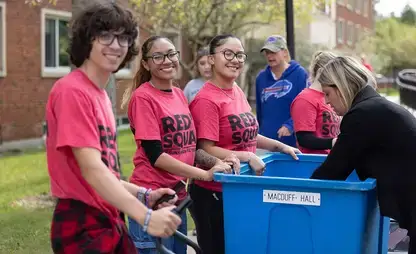
Move In & Move Out
Every August, SUNY Oneonta hires 8-12 student recycling ambassadors to help with new student move-in at first-year buildings. These ambassadors collect recyclables, engage with students and families, and ensure proper recycling practices. Large 30-yard dumpsters for cardboard are placed outside buildings, where ambassadors break down and monitor the materials. They also collect Styrofoam and plastic film, which are separately bagged and sent to the ReUse Center for recycling.
Thanks to these efforts, we diverted 461 pounds of Styrofoam and around 200 pounds of plastic film from landfills last fall. This unique program, recognized with an award from NYSAR3, is one of the few of its kind!
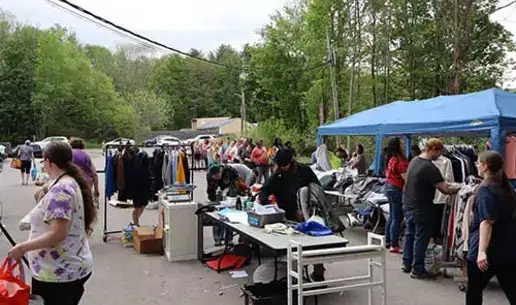
Each spring, SUNY Oneonta collaborates with the Otsego ReUse Center to collect gently used items from students moving off-campus. These items are then made available for free at an annual event. Typically, about five tons of material are saved from landfills and donated to the community, giving goods a second life.
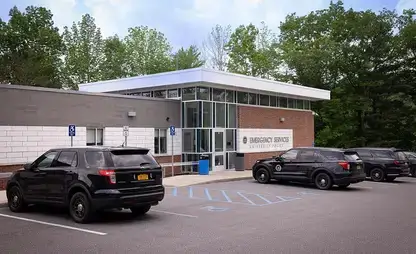
Net Zero Emissions
SUNY Oneonta recently finished building a new, state-of-the-art emergency services facility—the first in the SUNY system designed to meet NetZero Capable standards. This 9,000-square-foot building features heat recovery, enhanced insulation, radiant panels, and air source VRF systems. Its energy use is offset with renewable energy credits, with plans for large-scale, on-campus solar power in the works.
Even with 24/7/365 operations, the building boasts an impressive energy use intensity (EUI) of about 44 KBTU/SF/year, far outperforming the 100+ KBTU/SF/year typical for similar facilities.
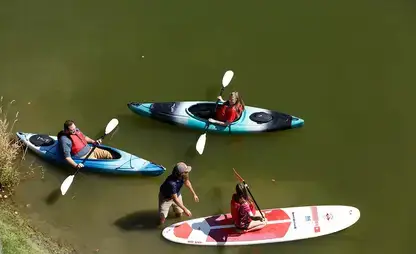
Outdoor Adventure Office
The Department of Outdoor Programs at SUNY Oneonta offers various activities and resources to help students grow physically, mentally, socially, and emotionally. They lead guided trips, advise the Outdoor Club, offer gear rentals, and teach outdoor skills. Their programs encourage personal development through outdoor engagement, risk-taking, and stepping outside comfort zones, promoting leadership, responsibility, healthy living, and self-awareness.
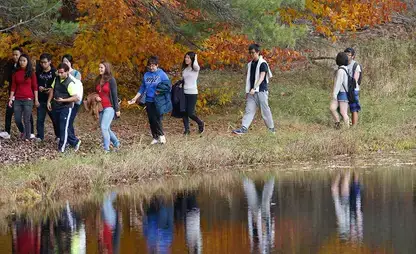
Phenology Tour
Join the campus Phenology tour, created by biology student Julia Ospina ’21, to participate in citizen science. The tour highlights native trees and invites participants to observe their seasonal changes, helping track how climate change is impacting various species.
Planetarium
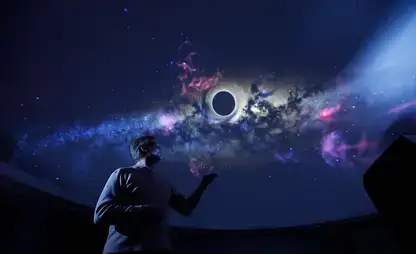
The SUNY Oneonta planetarium features the advanced Evans & Sutherland Digistar 6 system, offering sharp views of the stars, planets, and full-dome movies. It's used in various science classes and is managed by the student-run Nebula Society, which also runs shows for the campus. Public and school group shows are available during the school year.
Pollinator Garden
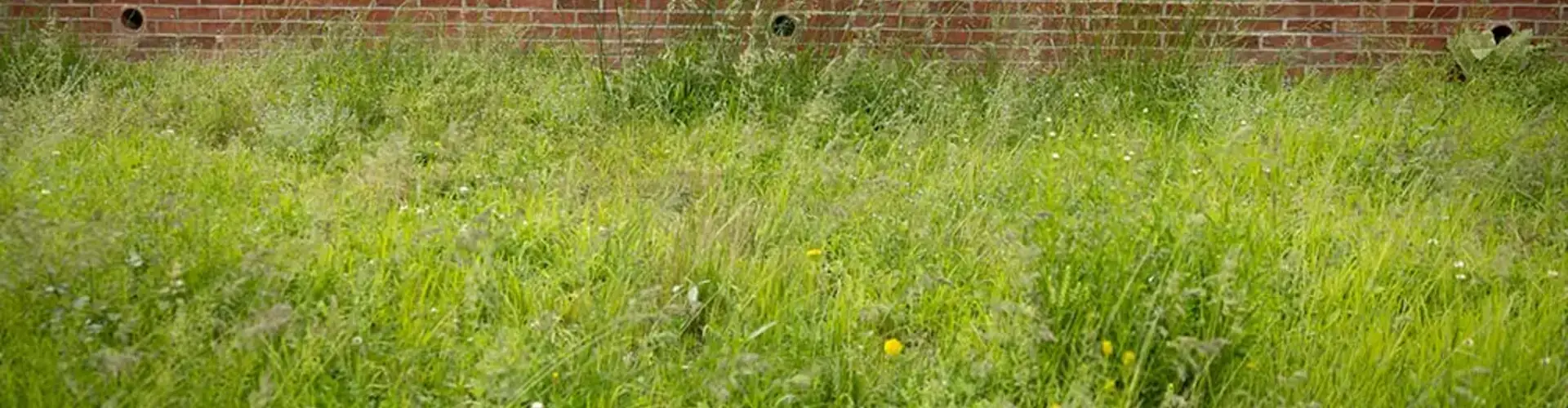
This meadow was designed and planted as a green space for everyone to enjoy! The plants growing here provide important habitat for local organisms, like pollinators, and the whole meadow performs natural process that collective make the SUNY Oneonta campus a more sustainable place.
Red Dragon Thrift Shop
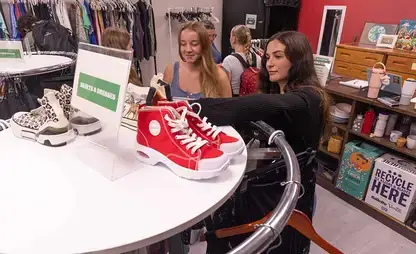
The Red Dragon Thrift Shop has been a campus favorite for over a decade, offering affordable items with all proceeds going toward a $2,500 sustainability scholarship. It's student-led, overseen by the Office of Sustainability, and has awarded over $15,000 since 2014. The shop also provides hands-on learning opportunities, with the Office of Sustainability encouraging even more campus involvement.
Science Discovery Center
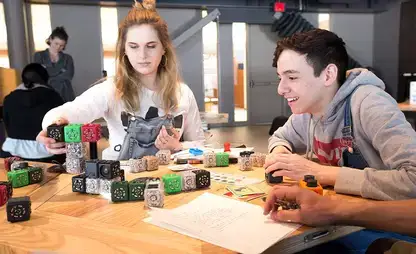
The A.J. Read Science Discovery Center is open Tuesday to Saturday, 10 a.m. to 4 p.m., offering new interactive exhibits. It’s free to visit, and group visits of 10 or more can be scheduled via a request form. The center is accessible and sensory-friendly, with a focus on ADA compliance and quiet spaces. Special events are posted on their Facebook page. Field trips are available, especially for grades 3-5, with engaging STEM exhibits and a planetarium.
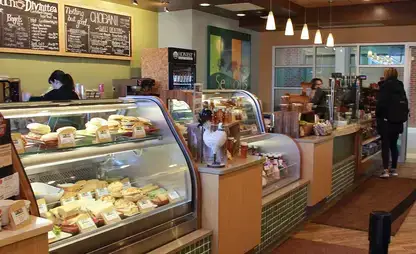
Seasons Café
Seasons Café focuses on local products to support farms and the community, featuring Stagecoach Coffee from Cooperstown and Divinitea teas from Schenectady, including their exclusive Red Dragon blend. Enjoy a Greek yogurt bar with sweet and savory options and check back often for a seasonally changing menu!
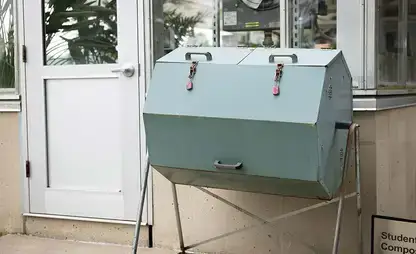
Small Composter Behind Wilsbach Hall
The small composter behind Wilsbach Hall reduces food waste while serving as a hands-on learning tool. Sustainability interns manage it and collect pre-consumer waste from Bugbee Children’s Center, teaching students, children, and the community about composting.
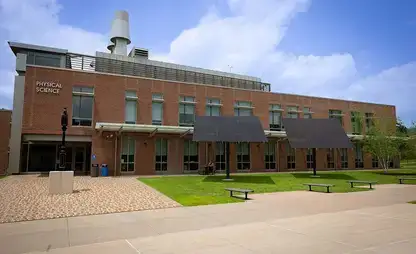
Solar Panels by Physical Science
The solar panels were installed with demonstration and interaction in mind. The panels partially power the physical science building, specifically the AJ Read Science Discovery Center, and will eventually act as an element of an interactive exhibit about solar energy. Additionally, they are the first major solar project on campus and their visibility is representative of SUNY Oneonta's commitment to clean energy. Each array has 12 modules and can produce up to 4.56 kW of electricity.
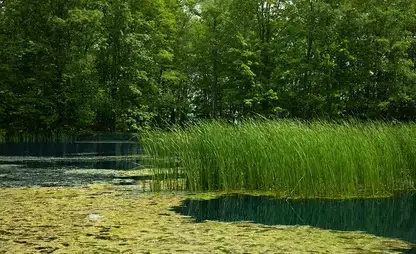
Stormwater Mitigation
SUNY Oneonta is tackling stormwater challenges with a $3.6M project with a target construction date beginning in 2027. Partnering with the State University Construction Fund, the plan includes green infrastructure like bio-retention ponds, rain gardens, and cisterns to manage runoff from 30 acres of impermeable surfaces. This will reduce flooding, improve air and water quality, protect a downstream Environmental Justice Area, and offer hands-on learning opportunities. This builds on a 2017-2018 stormwater project funded by a $900,000 NYS Green Infrastructure Grant.
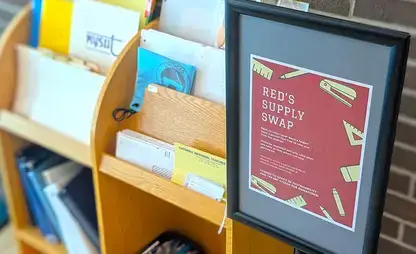
Supply Swap Shelf in the Library
The Library has a supply swap shelf where anyone can donate unused office supplies like binders, folders, pens and index cards. Students can then take what they need for free!
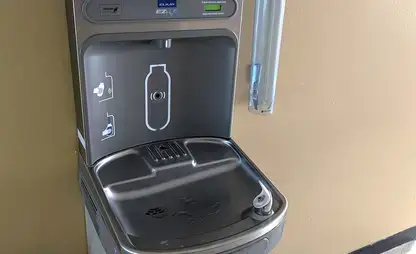
Water Bottle Refill Stations
Hydration stations at SUNY Oneonta make it easy to refill water bottles while reducing plastic waste. Each station includes a water fountain and a spout for quick bottle refills, with a counter showing the amount of waste saved. It's estimated that each station prevents 10,000 disposable bottles from entering the trash.
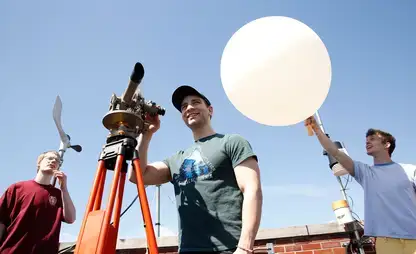
Weather Station
In August 2021, SUNY Oneonta installed a new weather station on the roof of the Perna Science building to continue the daily weather records we've been keeping since the early 1980s. This includes data on temperatures, precipitation, snowfall, and snow depth, as well as wind speed, humidity, atmospheric pressure and solar radiation. The new station ensures we can keep this record going for years to come.
The data, collected every five minutes, are used in student projects across multiple departments, especially Earth and Atmospheric Sciences. The data is updated to an online dashboard every 10 minutes (or hourly overnight to save battery). Anyone can check out the data for the past month through the dashboard!