
Overview
SUNY Oneonta’s Psychology major provides a theoretical and practical background in psychology and is designed to prepare you for graduate school and a wide range of careers. Approximately one-third of psychology graduates pursue graduate studies in psychology and related fields. Many students get hands-on experience through an internship on or off campus during their junior or senior year.
Department
Program Type
Area of Study
Delivery Mode
Requirements
See the list of required courses for Psychology majors and a sample plan of study for your next four years.
Online degree completion program for transfer students
Transfer students may be able to complete the Psychology B.S. fully online.
- Designed for students with some college credit
- Transfer credits evaluated individually
- Flexible format, with no "live" meeting times, so you can access readings and assignments on your own schedule and work at your own pace.
Career Opportunities
From research assistant to psychologist, there are lots of things you can do with a Psychology degree. Some require grad school. See a sampling of careers our grads are pursuing.
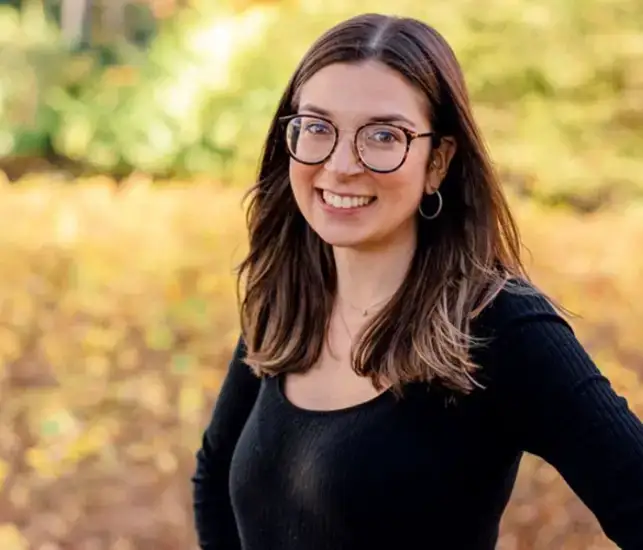
Alumni Success Story
Hands-On Learning
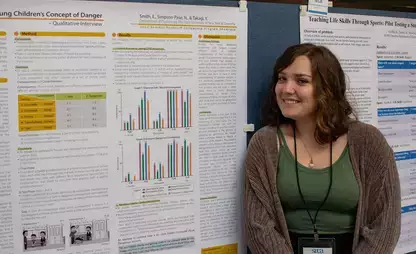
Many Psychology majors get hands-on, supervised learning experiences in a professional setting through internships at local community-based health and social service agencies. You can also receive course credit for working with a faculty member as a teaching or research assistant. In addition to getting involved in ongoing faculty research, you can design your own independent study research project.
Experiential learning is the “secret sauce” for SUNY Oneonta’s Psychology major, which prepares students for graduate studies and careers in human services, healthcare, business and education. Small class sizes, guaranteed internships, and many opportunities for service learning, independent study and research set the program apart.
“Katherine Lau, Psychology Department Chair:
As a student here at SUNY Oneonta, as a psychology major, uh you can expect to take uh courses where you're learning about human behavior. Why do we do things? Why do we feel things? And also why do we think in certain ways?
James Zians, Associate Professor of Psychology:
There's a clinical area. We have a developmental area. We have an area in um psychobiology and social psychology and then developmental psychology.
Harold Garcia, Junior Psychology Major:
All these things are important for me to learn because I'm learning the basics and then I use all the tips all the knowledge I've learned to like basically do real world studies.
James:
Secret sauce is really now our experiential learning. We have ways to do what's called service learning where it's a hybrid of you learn things in the classroom and then we go out to some of the nonprofit agencies and we practice some of the techniques and actually work with clients in those agencies.
Diana Chavez, Senior Psychology Major:
You're learning by doing it. And that's I think part of the outside experience that you get here. I think it's like you're not just sitting in a classroom, right? You have other ways of um learning and building skills.
Katherine:
You can go right into the community and work with people whether they are, you know, families in need or people in support of housing um or people that are involved with the court system. We also have where we have students work as peer mentors on campus.
James:
very hands-on. We have ample opportunities for students to engage in independent study and student research where they're working with a faculty in the research lab. You know, we have a strong internship program.
Diana:
Once I came here and I really saw the depths that our classes in the program go to, I knew that I was right where I where I wanted to be.
James:
Undergraduate major in psychology, you do anything later on. You can go to graduate school, you go to law school, you can go into HR, they go into the nonprofit agencies.
Katherine:
You have smaller class sizes. You get to know your actual faculty. You build relationships here, which I think is more important than going kind of through a program where you're very anonymous. You have more time to actually interact with your professors, interact with other students, and actually get to know each other.
Harold:
The professors usually they say it in the beginning of class when you first start the semester in their syllabus like they always mention their office hours their time and they always say if you ever struggle or anything or ever need help you can always come to my office hours. If you have any questions that you don't want to say in class you can always come to me and talk to me privately and that also shows to the professor that you actually care for your education and you care about doing well.
Katherine:
I carry my relationships with my students even after they they graduate because I've been able to actually spend time with them.
Harold:
The connections, the networking, the people that you meet here. You really you really are able to find your people when you come here. You will find people that have the same interest as you, maybe the same goals. I feel like that's that's the good part about Oneonta. It's the people."
Contact Admissions
Admission and Application
Welcome Center
108 Ravine Parkway
Oneonta, NY 13820
United States
Request Information
Are you on our Admissions mailing list? Sign up to receive information on events, application deadlines and more.